
Partnership marketing: The missing link in growing bus use
Across the UK, significant effort and funding have gone intoimproving bus services. Frequencies have increased, fares have been simplified,and ticketing has become more flexible. Yet one challenge persists: how do wepersuade more people to actually use the bus?
Our experience delivering the ‘Buses for You’campaign in West Northamptonshire suggests the answer does not lie in transportalone. Instead, it sits at the intersection of place, partnership and purpose.
Too often, bus marketing is expected to do the heavy liftingby itself — explaining routes, fares and timetables in the hope that awarenesswill translate into behaviour change. But awareness, while necessary, is rarelysufficient. The demand to travel is virtually always a derived demand. People travel for work, leisure, health andother reasons. This is where partnership marketing can play an important role,through engaging with those already directly communicating to these differentaudiences.
Moving beyond transport-led messaging
‘Buses for You’ is being delivered across WestNorthamptonshire as part of the Bus Service Improvement Plan, led by WestNorthamptonshire Council, coordinated by GO Travel Solutions, and funded by theUK Government. From the outset, the campaign was designed around a simpleprinciple: don’t sell the bus — sell what the bus enables you to do.
Rather than positioning bus travel as a standalone service,the campaign embeds it into experiences and journeys people already value —from theatre trips, football matches and days out, to everyday access to work,education and social connection in later life. This broader framing reflects how buses support both access to jobsand opportunities as well as quality of life, making collaboration with trustedlocal partners essential to the campaign’s success.
Partners as trusted voices
Over 22 partners have taken part, including theatres, sportsclubs, cafés and visitor attractions. These partners have become advocates forbus travel within their own communications.
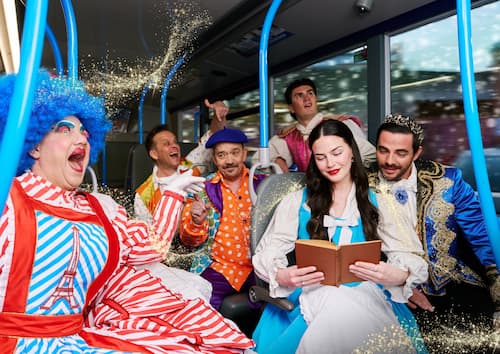
For example, theatres such as Royal & Derngate inNorthampton supported the campaign by taking part in on-bus photography,including pantomime casts, helping to bring the messaging to life in a way thatconnected with local audiences. Sports clubs like Northampton Town FC andNorthampton Saints used familiar faces — players and mascots — to normalisegroup travel by bus for fans. This matters because trust does not automaticallysit with transport operators. It sits with places people already know and love.
Shared value, not sponsorship
Critically, while some elements of the partnerships arecommissioned, the overall approach is grounded in shared outcomes rather than apurely transactional model.
Partners benefit from wider audience reach and alignmentwith sustainability goals, while the bus network benefits from marketingactivity that also supports their own promotional efforts.
This approach reframes bus travel as part of a wider placenarrative — supporting local economies, cultural venues and community life. It alsoallows messaging to flex throughout the year, aligning with seasonal eventsrather than relying on one-off bursts of activity.
Evidence that partnership works
The results indicate the strength of this approach. Duringthe campaign:
- 806% increase in group ticket sales in August 2025 compared to August 2024
- Over 130,000 passengers travelled using group tickets between July 2025 and March 2026.
- 2.2% increase in customer trips in September 2025, compared to September 2024
In response to the campaign, Stagecoach Midlands commentedthat promoting the bus as part of a “great day out” can support sustainabletravel while linking communities to local attractions, education, employmentand the wider economy.
What this means for the sector
The lesson for the wider bus industry is clear: growing bususe is not a transport-only challenge. It requires collaboration with thoseshaping how places are experienced — from arts and sport to hospitality andtourism.
Partnership marketing does take time. It requiresrelationship-building, shared planning and flexibility. But it enhancesrelevance to the everyday life of audiences.
If we want buses to be chosen more often, they must bevisible where life happens — and endorsed by voices people already trust.
